


In this section
Treating your breast cancerWhat is Radiation Therapy?
What to Expect?
Treatment Team
Radiation Oncology Treatment Team
Meeting with a Radiation Oncologist
General Radiation Therapy Course Outline
Questions to ask before treatment
Treatment Types
Side Effects
Facts to Help Patients Make an Informed Decision
What Are Clinical Trials
Treating your breast cancer
Intro/Background
Breast cancer is the most common type of cancer in women, according to the American Cancer Society. This year, there will be an estimated 310,720 new cases of invasive breast cancer diagnosed in women and 2,790 cases in men, with an additional 56,500 cases of ductal carcinoma in situ (DCIS) diagnosed in women. Approximately, 42,780 breast cancer deaths will occur in 2024. Breast cancer can often be cured, with about 80% of all patients with breast cancer living at least 10 years after their diagnosis.
Radiation therapy is combined with other treatments, including surgery and systemic therapy, to reduce the risk of the tumor coming back and improve the probability of surviving the cancer. Radiation therapy can also be used when the cancer has spread to other parts of the body and can provide symptom relief and local tumor control. Talk with your treating doctors to determine whether radiation should play a role in your care.
What is Radiation Therapy?
Radiation therapy, or radiotherapy, is the use of various forms of radiation to safely and effectively treat cancer and other diseases. Radiation therapy works by damaging the genetic material within cancer cells. Once this happens, the cancer cells are not able to grow and spread. When these damaged cancer cells die, the body naturally removes them. Normal cells are also affected by radiation, but they are able to repair themselves in a way that cancer cells cannot.
Your doctor will use several techniques to increase the efficacy of the treatment and reduce the associated side effects. One of these techniques is fractionation, or the division of your radiation course over several treatments, spread out over days or weeks. By spreading the treatments out, this allows your normal cells to heal between treatments whereas the cancer cells are unable to heal to the same degree. Over time, this results in preferential damage to the cancer cells, lower damage to normal, healthy cells, and an improved ability to control the treated tumors.
Your radiation oncologist will also use complex blocking techniques to limit the high doses of radiation to the tumor area while shielding as much of the surrounding normal tissue as possible. All the organs in your body have a different sensitivity to radiation, so your radiation oncologist will incorporate your specific anatomy and the location of your cancer, to create a radiation plan that maximizes the efficacy and minimizes the side effects of treatment.
If you have any questions about your radiation or how it is being delivered, please discuss it with your treating Radiation Oncologist.
What to Expect
A diagnosis of breast cancer is typically made after a patient undergoes a biopsy that was ordered due to an abnormality on a previous mammogram or ultrasound or when something abnormal is felt in the breast or one of the lymph nodes draining the breast.
The first person you will likely talk to is the doctor who ordered your biopsy; this may be your primary care doctor, your gynecologist, or another member of your healthcare team. After discussing the new diagnosis with your ordering practitioner, you will be referred to a member of the breast cancer team. Some patients refer themselves for a mammogram, ultrasound, or other imaging, and if so, you will be directed to a cancer specialist, with whom you should follow up to treat your cancer.
Upon referral to the breast cancer team, you will be set up to see one of several cancer specialists, including a breast surgeon, a medical oncologist and a radiation oncologist. The timing of these visits may vary by institution; sometimes the visit with your medical oncologist and/or radiation oncologist may not occur until after your surgery. You will want to ask your cancer team about all your treatment options.
In many cases, your cancer will need to be treated by using more than one type of treatment. For example, if you have breast cancer, you might have surgery to remove the tumor (by a breast surgeon), then have radiation therapy to destroy any remaining cancer cells in or near your breast or chest wall (by a radiation oncologist). You also might receive chemotherapy (by a medical oncologist) to destroy cancer cells that may have traveled to other parts of the body.
Treatment Team (doctors you will meet with)
Once you find out you have breast cancer, you will likely meet with several doctors. These doctors may include the following:
If your cancer was diagnosed at the time of a screening mammogram, the first physician you may speak with may be a Radiologist. These physicians specialize in interpreting medical imaging and performing interventional procedures, including breast and lymph node biopsies, that lead to the diagnosis of breast cancer. If you are diagnosed by a radiologist, they will direct the results to the ordering practitioner, likely your primary care doctor or primary care practitioner, and provide a referral to a breast cancer specialist, likely a breast surgeon.
After your biopsy results become available, you may meet with, or speak on the phone with, your Primary Care Physician or the clinical that ordered the breast biopsy, especially if you presented to them with symptoms. This doctor will usually answer your preliminary questions and make sure you have a referral to a cancer specialist for further management.
The first person in the breast cancer treatment team you will likely meet is the oncology breast surgeon. This doctor will review all of your imaging and biopsy results and make initial recommendations about how your treatment will be managed. When appropriate, they will also present your case at the institution’s multidisciplinary tumor board for review and treatment recommendations. If and when a surgery is required, they will discuss treatment options with you and perform the necessary surgery. They may also place an intravenous access line, often called a port, to aid in the delivery of chemotherapy treatments, if necessary.
Depending on the extent of your cancer and the tumor characteristics, you may also be referred to a medical oncologist, a cancer doctor who specializes in treating cancer with treatments that go throughout the body. These treatments include chemotherapy, targeted therapy, immunotherapy, and hormonal therapy. These treatments can be given either before or after surgery, depending on the extent of your cancer.
Before or after your surgery, you may also be referred to a radiation oncologist, a cancer doctor who specializes in treating disease with radiation therapy. Your doctors will determine whether a referral is necessary based on the extent of disease at presentation and at the time of surgery, the pathology report, and any imaging done to that point.
You may also speak with a plastic surgeon, who specializes in performing breast reconstructions after completion of the oncologic surgery by your breast surgeon. Often, plastic surgeons work together with the breast surgeon and perform their procedures at the same time and/or as staged procedures after the initial oncologic surgery.
Radiation Oncology Treatment Team
While you undergo radiation therapy, a team of highly trained medical professionals will be working together to make sure you receive the best possible care. Radiation oncologists are the doctors who oversee the care of each person undergoing radiation treatment. Other members of the treatment team include radiation therapists, medical physicists, dosimetrists, and front desk staff.
For patients with breast cancer, there may be other members of your treatment team that may participate in your care. Those team members may also include radiation oncology nurses, medical assistants, social workers, nutritionists, and/or patient navigators. Additionally, some patients who are healing from surgery may be meeting with a wound care specialist or a physical therapist / occupational therapist.
Learn more about the specific roles of each of the radiation oncology team members.
Meeting with a Radiation Oncologist
If you are considering radiation therapy, you must first meet with a radiation oncologist. A referral will be made to the radiation oncologist by one of your other treating doctors and an appointment will be made.
Before you meet with your radiation oncologist, your radiation oncologist will prepare for your visit by reviewing your medical record. This review will include any previous imaging, pathology reports, laboratory results, and/or notes written by other members of your cancer treatment team. The goal of this first visit is typically to determine whether radiation therapy will be helpful in treating your disease. In most situations, you will not be receiving radiation therapy on that day but instead, if deemed appropriate, the course of radiation will be set up.
During your scheduled consultation, you may also meet with several other members of the radiation treatment team, including a medical student or radiation oncology resident, a radiation oncology nurse, and/or a nurse practitioner or physician’s assistant. These team members are present to help gather important information prior to meeting with the radiation oncologist.
The radiation oncologist will also complete a thorough patient history and physical examination. The goal of the patient history is to understand your breast cancer journey and the things that have happened to bring you to this point in time. This includes reviewing your current medical history, past medical history, past surgical history, family history, medications, allergies, lifestyle and current symptoms.
The goal of the physical exam is to examine the relevant areas of your body to confirm previously documented findings, determine the extent of disease, and make sure treatments can be delivered safely. For patients with breast cancer, this typically includes an assessment of your general condition as well as a focused exam of the breast or chest wall (depending on which procedures have been done previously), including an evaluation of the skin, nipple and areola, breast tissue or breast reconstruction (including any breast implants or tissue expanders), and surrounding lymph node areas. The assessment may also include an evaluation of your arm mobility.
Finally, your radiation oncologist will discuss with you the role of radiation therapy in the management of your cancer. Specifically, they will outline any potential benefits and risks of radiation therapy, including the expected side effects you will experience. They will also discuss alternatives to radiation and whether they may play a role in your care. Throughout your visit, you will have the opportunity to have your questions answered.
If you are offered radiation and you agree to proceed, often you will be asked to sign a consent form, detailing what was discussed during your visit, including the side effects of treatment. You will then be set up to start the radiation treatment planning process, where the radiation therapy will be designed specifically for your anatomy. Occasionally, your doctor will not have enough information to make a proper recommendation, and will have you return at a later time after you’ve completed more treatments from other doctors or they obtain more information from your other doctors. If this is the case, you will likely be directed to make a follow up visit to discuss the role of radiation at a later time.
General Radiation Therapy Course Outline
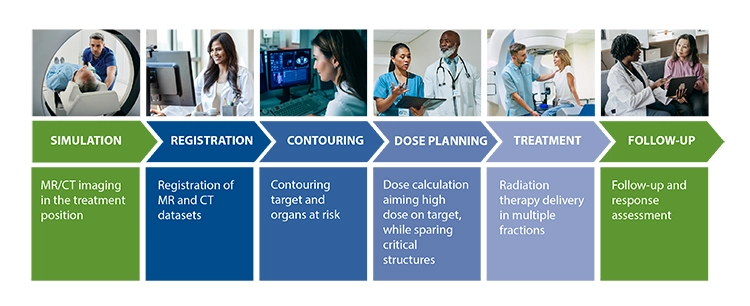
Once your consultation is complete, if you have been recommended to have radiation therapy, your Radiation Oncologist will let you know about the general outline and timing of your upcoming radiation therapy course. There are many steps that have to happen between your consultation and when you actually start your first radiation treatment, and this process can take several weeks or more. Please talk with your radiation oncologist about the specific treatment timeline they have for you.
Questions to ask before treatment
During your initial consultation, your doctor will discuss with you the potential role that radiation therapy may play in your cancer journey. During this process, you will likely have many questions, and it is important to ask any question related to radiation therapy to your radiation oncologist, as they are the most knowledgeable person to address these concerns. To help you keep track of your questions, it is important to write them down to ensure that all of your questions are answered to your satisfaction. Additionally, where possible, consider bringing a family member or trusted friend with you to your appointment. These supports can help you keep track of the things that you are hearing from your physician. If you forget something or don’t understand a particular answer, it is ok to ask a question again. The most important thing is that you understand what is happening and what you can expect when going through radiation therapy.
Look for more details and specific questions you may consider during your radiation oncology consultation.
Treatment Types
If you find out you have breast cancer, you should discuss your treatment options with your physician, as they are the only person with all the information to provide you with the most accurate recommendations. Breast cancer treatment options, modalities, and timing will vary depending on the stage and location of the cancer and will be individually tailored to your specific needs.
Learn more about breast cancer staging.
Breast cancer treatment options include:
Surgery: a breast surgeon removes areas in the breast and/or lymph nodes to control the breast cancer. Surgery has traditionally been the typical first step for treatment of localized breast cancer.
However, for selected patients, treatment practices have changed to allow systemic therapy to be given as the first treatment to help shrink the tumor prior to surgery. Surgery can often be followed by systemic therapy or radiation therapy to further decrease the risk of cancer returning in the breast, chest wall and/or lymph nodes.
Some types of surgeries for breast cancer include:
Lumpectomy or partial mastectomy: the surgical removal of cancerous tissue along with a small rim of surrounding healthy breast tissue. This type of surgery may also be called breast-conserving surgery, as the remainder of the breast is left intact. This type of surgery is often followed by radiation therapy.
Mastectomy: the surgical removal of the entire breast. Sometimes, breast reconstruction can be performed after the mastectomy, either during the same surgical procedure or later in time as part of a staged procedure. In select cases, radiation therapy is recommended after mastectomy.
Sentinel Lymph Node Biopsy or Lymph Sampling / Dissection: Depending on your risk factors, lymph nodes may be removed at the time of your surgery; this possibility will be discussed by your surgeon prior to surgery. A sentinel lymph node biopsy is a procedure where only a limited number (usually between one and three lymph nodes) are removed to determine whether the cancer has spread to the lymph nodes. These nodes are strategically chosen as they are the most likely lymph nodes that a cancer would have traveled to. If one or more of the sentinel lymph nodes contain tumor cells, or if lymph nodes were thought to be involved prior to the surgery, the removal of additional lymph nodes may be recommended, which is called a lymph node dissection.
Breast Conserving Therapy (BCT): Breast conserving therapy refers to two separate treatments, surgery and radiation therapy, given in combination to treat early-stage breast cancer. Specifically, BCT consists of breast conserving surgery, typically a partial mastectomy, followed by radiation therapy. This approach is often considered to be equally effective as mastectomy in curing breast cancer. Ask your surgeon and radiation oncologist about the risks and benefits of both treatment options.
Radiation Therapy: a radiation oncologist prescribes and oversees the delivery of radiation therapy to the breast/chest wall or lymph nodes to decrease the chance of cancer returning. This is typically done after the appropriate surgery has been performed and after chemotherapy or immunotherapy has been given.
Learn more about Radiation Therapy Treatment Modalities.
Systemic Therapy/Medical Therapy is another treatment modality that is recommended to improve cure rates or prevent a new breast cancers from developing. A medical oncologist will evaluate you and determine which medications may be most helpful in accomplishing those goals. Ask your medical oncologist what medications may be best for you.
Chemotherapy: a treatment that is typically given through an IV infusion and passes through your bloodstream in order to damage cancer cells. Often, two or three different types of drugs may be combined to get the best outcome. While the dose and schedule for treatment varies, chemotherapy is usually delivered every two to three weeks over several months. When chemotherapy is given before surgery it is called neoadjuvant chemotherapy; when it is given after surgery, it is called adjuvant chemotherapy.
Hormonal therapy: in breast cancer, this treatment can be used to block the effects of the female hormone, estrogen, in the body. Estrogen has been shown to cause tumors to grow if the tumor cells have receptors for estrogen, therefore using hormonal therapy can disrupt the growth of cancer cells and prevent cancers from returning. Hormonal therapy is usually prescribed as a daily pill and started during or after radiation therapy. While the dose of the pill may change depending on the type of pill prescribed, this pill is usually taken daily for five to 10 years.
Immunotherapy: a treatment that works by either stimulating your immune system to attack cancer cells or providing your immune system with what it needs, such as antibodies, to fight cancer. Immunotherapy can be given with chemotherapy and radiation therapy, and is often given over a course of many months or years.
Side Effects
The side effects you might experience will depend on the part of the body being treated, the type of radiation you receive, the dose of radiation given and whether you also receive chemotherapy. Before treatment begins, ask your doctor about possible side effects and how best to manage them. Please note this list doesn't represent all of the possible side effects.
Learn more about side effects.
Facts to Help Patients Make an Informed Decision
Once you have received all the information from your doctors and cancer specialists, it will be time to make a decision about your treatment. In most cases, your radiation oncologist will present you with the management options that are most suitable for your cancer, taking into consideration your previous cancer treatments and other medical comorbidities.
When making a decision, there are several things you should keep in mind.
What is the diagnosis: make sure you understand the type of cancer you are being evaluated for and how extensive the cancer may be. Often, people compare what types of treatments they are being offered to those received by other family members and friends. While this is often a good way to get other opinions, these experiences may not be directly applicable if you are not dealing with the same cancer and the same stage.
What is the goal of the therapy: sometimes, the goal of the treatment can be to cure the cancer. In these situations, the treatments can be more intense and take on higher risk to achieve a cure. Other times, the goal of the therapy is to provide palliation, either to help make a patient feel better, to prevent specific cancer related complications, or to help a patient live longer. In these situations, minimizing side effects and maximizing quality of life may be most appropriate.
What are the available treatments: it is important to know what treatments are being offered to you and why they are being offered. Sometimes, common treatment options are not available to you and it is important to understand why this may be.
What are the risks and benefits of each treatment: each of the treatments offered to you has different characteristics that make the treatment either better or worse in your particular situation. Those differences may include side effects, number of treatments, costs, and convenience. Make sure you understand these differences prior to making any final decisions.
Ask Questions: it is always important that you feel comfortable asking your medical care team questions when you feel you need more information. In order to make an informed decision, you must have all of the necessary information available to you.
Second Opinions: sometimes, you or your medical team may discuss obtaining a second opinion. In this situation, you may meet with another radiation oncologist to discuss your cancer, and they may provide you with an additional opinion about how your cancer should be managed. Sometimes, they may have access to treatments or clinical trials that are not offered at the initial center. Ultimately, if you would like a second opinion, it is often important to do so as soon as possible in order to minimize delays in your care.
What Are Clinical Trials
Cancer specialists regularly conduct studies to test new treatments, new tests to guide treatment decisions, and new ways to improve the patient experience. These studies are called clinical trials. Most standard cancer treatments are based on the results of previous clinical trials. Patients may be eligible for clinical trial participation at any part of their cancer journey, including before, during, and after other cancer-related treatments. Many national clinical trials are available through cancer doctors everywhere, not just in major cities, university centers or in large hospitals. However, not all clinical trials are offered at every cancer center. If you are interested in participating in a clinical trial, please let your physician know so that they can let you know which clinical trials may be available for you to participate in.
Learn more about clinical trials.
Learn more from patients with breast cancer being treated with radiation therapy.
There are many resources available for patients to gain more information about their diagnosis and treatment options. View resources that may help you during your cancer journey.

Copyright ASTRO
Privacy Policy
Terms of Use

251 18th Street South
8th Floor
Arlington, VA 22202
Telephone: 703-502-1550
www.astro.org
This section does not use cookies for tracking. By moving outside of this area, you will be moving to pages that store cookies to improve functionality.
Click "Continue" to proceed.